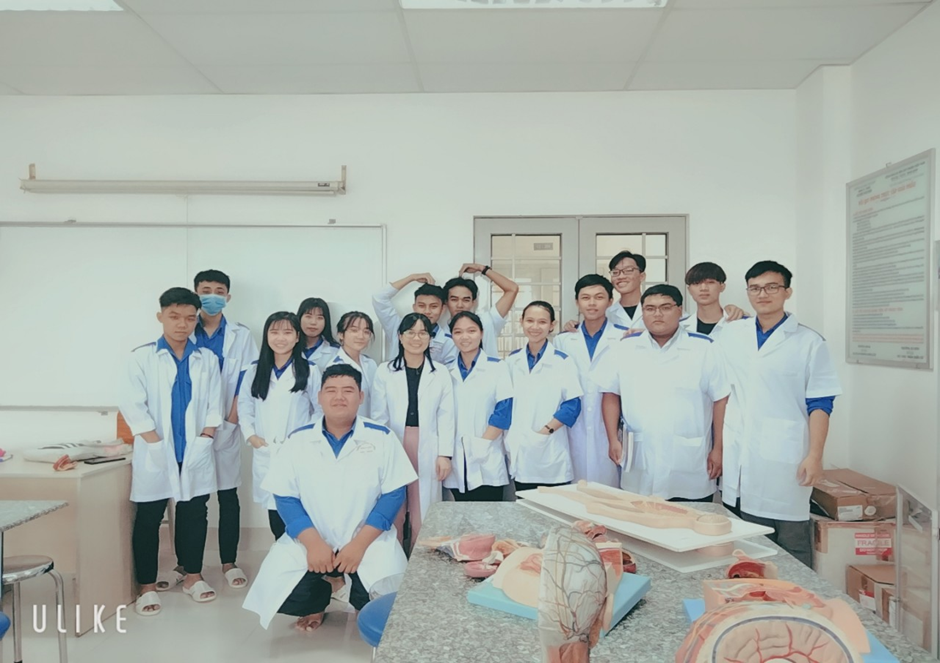
Program Objectives
The Bachelor of Medical Imaging Technology program has a career-oriented design to meet the needs of employers and relevant parties. The program specifically aims for students to achieve several key objectives. Students gain fundamental knowledge of basic medicine, social sciences, political science, law, information technology, and foreign languages. They also learn to plan, organize, supervise, manage, and operate professional activities in the medical imaging field. The program ensures students can apply foundational technical knowledge of basic science, medicine, engineering principles, and specialized subjects to their professional work. Graduates can work independently or in teams in changing conditions, accepting both personal and group responsibility. They also develop the ability to guide and supervise others in performing defined tasks. Students learn to think critically, evaluate the quality of completed work, assess the performance of team members, and communicate problems and solutions to others in the workplace. They can also transfer and share knowledge and skills to perform specific or complex tasks. The curriculum provides the necessary skills to solve complex problems. It teaches students to plan, coordinate, and manage resources, and to evaluate and improve the effectiveness of activities. Graduates can self-direct, form professional conclusions, defend their personal views, lead, start businesses, and create jobs for themselves and others. The program emphasizes being honest, objective, and precise, always ensuring patient safety during professional work.
Admission subject combinations
The program accepts applicants from two subject combinations. Combination A00 includes Mathematics, Physics, and Chemistry. Combination B00 includes Mathematics, Chemistry, and Biology.
Program duration
The Bachelor of Medical Imaging Technology is a four-year program, which includes eight semesters and 149 credits.
Target applicants
The university admits students by the regulations of the Ministry of Education and Training and the specific rules of Tra Vinh University.
Curriculum
You can see the curriculum content here
Learning outcomes
Regarding knowledge, graduates can apply fundamental knowledge of political science, law, national defense education, and physical education to their professional activities. They can use scientific methodology in technical practice, their studies, and scientific research. They also apply their knowledge of law and public policy to the work of protecting, caring for, and improving people’s health.
In terms of skills, graduates can combine knowledge of basic science, basic medicine, engineering principles, and specialized subjects to solve problems in the medical imaging field. They can expertly perform common imaging techniques, X-ray procedures using contrast agents, and techniques on computed tomography (CT) and magnetic resonance imaging (MRI) machines. They can analyze the principles, rules, and procedures for operating, preserving, and maintaining several types of medical technology equipment. Graduates can also analyze the technical quality of image films and identify abnormal signs. They can proficiently perform maintenance and servicing for diagnostic imaging equipment. They can manage the activities of a diagnostic imaging department and handle public health communication and education. Graduates can also coordinate their skills to participate in scientific research and access information from many different sources and formats. They can use English at level 3/6 for communication and apply basic information technology to research specialized professional documents.
Scholarship opportunities
Students can apply for scholarships under the general policies of the Ministry of Education and Training and Tra Vinh University.
Career opportunities after graduation
Graduates of the Medical Imaging Technology program have many job options. They can work as medical imaging technicians in hospitals, clinics, medical facilities, medical training institutions, and diagnostic and rehabilitation centers. They can become technical specialists who care for, maintain, and perform minor repairs on common medical equipment. Other roles include installing, repairing, and providing warranty services for medical devices or consulting on medical equipment services. Graduates may also work as technical officers at medical facilities, hospitals, and research institutes or in the management and quality inspection of medical equipment. Additionally, they can participate in teaching and research at universities, colleges, academies, institutes, and scientific research agencies.
Postgraduate opportunities
After graduating, students in Medical Imaging Technology have the full capacity to continue their studies to a higher professional level. They can participate in short-term training courses in their field in Vietnam and abroad. They also have the option to study for a second bachelor’s degree in a related major. Furthermore, they can study for postgraduate degrees, such as a Master’s or a Ph.D., in Medical Imaging Technology at universities in Vietnam or other countries.
Contact
Department of Diagnostic Imaging and Medical Imaging Technology
College of Medicine and Pharmacy (CMP)
Tra Vinh University
Address: 126 Nguyen Thien Thanh Street, Hoa Thuan Ward, Vinh Long Province
Phone: Dr. Nguyen Tan Nhat Minh – 0944493123