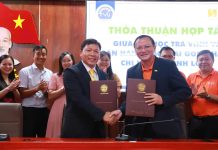
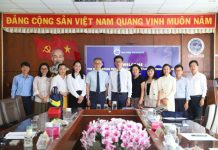
On January 5, Tra Vinh University officially launched an intensive academic and field-based exchange program in collaboration with its strategic partner, Saxion University of Applied Sciences (the Netherlands). More than a routine annual activity, the program serves as a strong affirmation of the sustainable partnership between the two institutions, jointly addressing the pressing challenges of climate change in the Mekong Delta.
The delegation from Saxion University of Applied Sciences included leading professors Prof. Harry Futselaar, Prof. Patrick de Lange, and M.A. Han de Lange, along with 40 Saxion students.
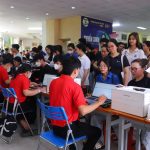
Welcoming the delegation on behalf of Tra Vinh University were Dr. Vo Phuoc Hung, Principal of the College of Engineering and Technology (CET); Dr. Tran Thi Ngoc Bich, Vice Principal of the CET; Ms. Nguyen Thi Mai Khanh, Deputy Head of the International Affairs Department (IntAD); Dr. Nguyen Thanh Tuu, Head of the Department of Environment; together with faculty members, staff, and student volunteers.

In his welcoming remarks, Dr. Vo Phuoc Hung, Principal of the College of Engineering and Technology (CET), highly appreciated the outcomes of the cooperation between the two institutions in recent years, particularly student exchange activities, international collaboration initiatives, and the sharing of academic and practical experiences. He expressed his expectation that participating students and lecturers would gain valuable exposure to local realities while contributing scientific perspectives and proposing feasible solutions to challenges related to infrastructure development, transportation systems, housing construction, and water resource management suited to the environmental, economic, and sustainable development conditions of the Mekong Delta.


Following the opening session, an orientation program was conducted to present an overview of the activity plan, announce the schedule, organize working groups, and review each group’s Plan of Action and Problem Definition in preparation for the fieldwork phase.
The program will take place over two weeks (January 4–16, 2026) as a “hands-on semester.” Moving beyond the classroom, mixed teams of Vietnamese and Dutch students will engage in field experiences across Tra Vinh, Ben Tre, Vinh Long, Dong Thap, and Can Tho.
The 2026 program focuses on three critical pillars for the region:
Smart Adaptation: Seeking solutions to saltwater intrusion and sea-level rise through nature-based solutions in the coastal areas of Duyen Hai.
Sustainable Infrastructure: Comparing and proposing models for housing, transportation systems, and bridges adapted to soft soil conditions and the unique hydrological characteristics of the Mekong Delta.
Circular Economy: Exploring advanced models such as the Mekong Salt Lab, green production processes at Heineken Vietnam, and renewable energy projects including wind and solar power.
The presence of the Saxion delegation in the very first month of 2026 stands as clear evidence of Tra Vinh University students’ growing international integration. This exchange space goes beyond expertise in construction engineering and environmental studies, becoming a crossroads of cultures where ideas from the younger generations of both countries are nurtured to shape a greener future.
The upcoming 14-day journey promises to deliver valuable scientific reports, feasible Plans of Action, and, above all, to further strengthen friendship and elevate the cooperative partnership between Tra Vinh University and Saxion University of Applied Sciences to a new level.